
Costs & pricing
German import prices up 6.8%: What this means for China sourcing in 2026
The German average is not your supplier quote. It does show why intermediate goods, metals and electronics need a fresh cost review.
 Vinko Kolar· on the ground in Guangzhou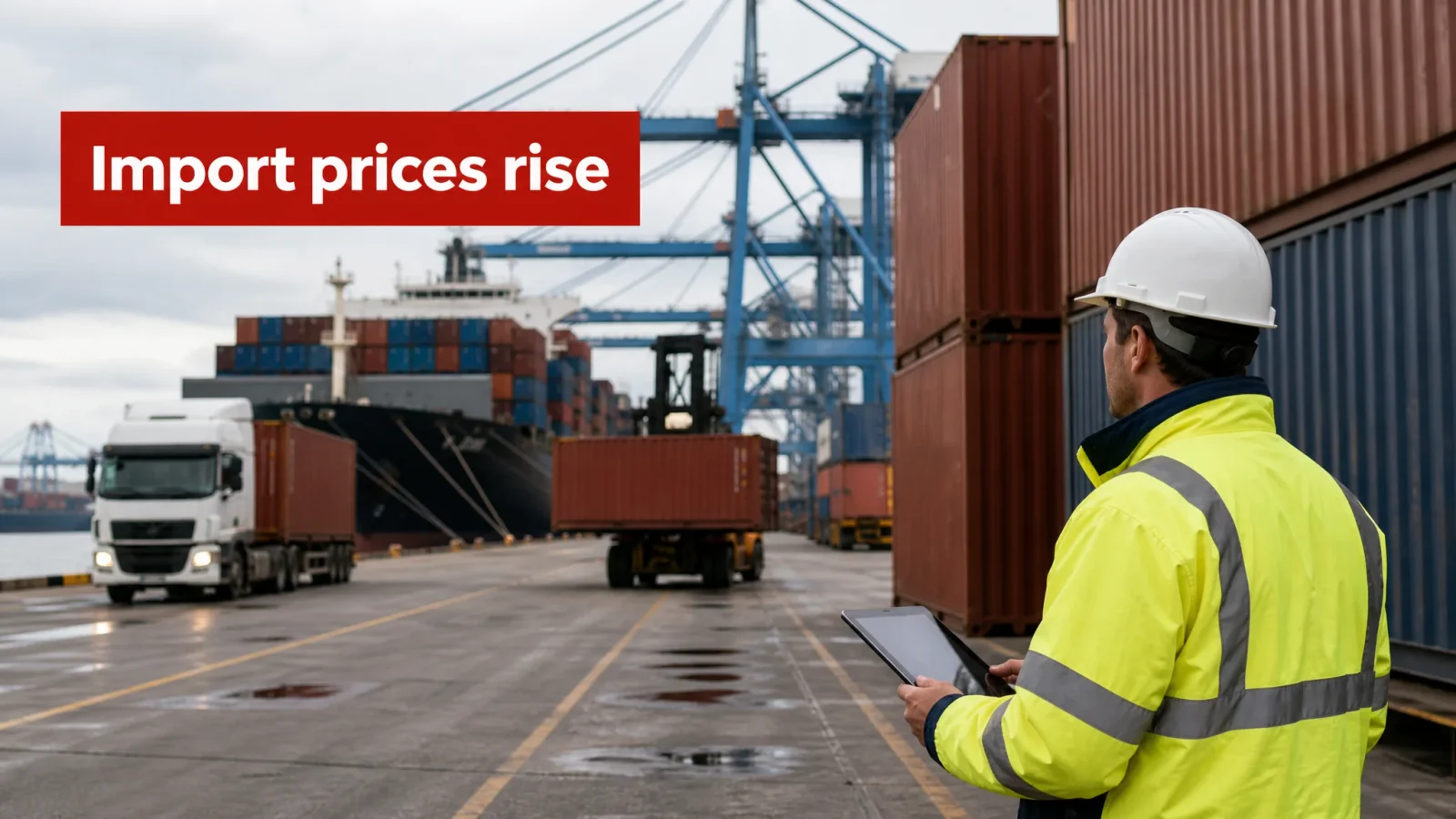
Destatis reported on 28 August 2026 that German import prices were 6.8% above the previous year in July and 0.2% above the previous month. Intermediate goods rose 10.2%, non-ferrous metals 26% and electronic components 15%. For China sourcing, this is a cost-structure warning—not a reason to accept every supplier increase without evidence.
An index is not your landed cost
Destatis covers broad baskets. Your price also reflects specification, MOQ, Incoterm, tooling, currency and margin. Split the difference into visible drivers.
Ask for material drivers
For metal- or electronics-heavy products, request the material and surcharge logic. A supplier that only raises the total offers no auditable explanation.
Decide with scenarios
Compare China, alternate origins and design changes on the same landed-cost basis. A small material change can matter more than a new freight quote.
Practical checklist
- Split top SKUs into material, conversion, freight, duty and currency.
- Request a commodity or component document behind each price change.
- Run three scenarios for currency, metal and electronics prices.
- Review customer price, safety stock and supplier terms against the new cost corridor.
Decision frame for your import
Destatis reported on 28 August 2026 that German import prices in July were 6.8% above the previous year and 0.2% above the previous month. Intermediate goods rose 10.2%, non-ferrous metals 26%, copper 33% and electronic components 15%; excluding energy, the rise was 4.8%. This is a cost warning, not an automatic surcharge on your China order.
Data and document pack per item
Break SKU landed cost into material, conversion, packaging, ocean freight, duty, import VAT, currency, insurance and margin. Record BOM share, price basis, validity, Incoterm and exchange rate. This lets you test a supplier request against published indexes and actual drivers.
- Document material share and commodity reference for key SKUs.
- Split a price change into material, energy, labour, freight and currency.
- Run three scenarios for copper, electronics, USD and freight.
- Decide price, stock and customer margin together.
A verification workflow from supplier to import
- Archive Destatis components with release date as an external reference.
- Request old and new supplier costing on the same Incoterm basis.
- Test each cost block and accept only evidenced drivers.
- If the increase persists, model design, material or alternate-origin options.
- Reconcile forecast and actual landed cost at quarter end.
A worked decision example
A supplier asks 7% more for an electronics item and cites import prices. The BOM shows electronics are only 30% of unit cost; the rest is assembly, packaging and freight. A transparent bridge gives a lower defensible corridor. The retailer accepts the evidenced part, negotiates the rest and evaluates an alternate component.
Common failure modes and countermeasures
- Passing the 6.8% headline directly into price — calculate SKU share.
- Mixing material and currency — run separate sensitivities.
- Comparing EXW only — normalise landed cost and Incoterm.
- Treating a short spike as a permanent trend — record period and scenario.
Message to send to the Chinese supplier
Request a cost-block explanation:
Please provide old and new unit cost with material, labour, energy, packaging and freight shares. Please state price basis, Incoterm, validity and the commodity or component reference used. Please notify us before the next production of changes to material, BOM, currency or freight.
Release criteria for the file
A release is defensible only when four questions can be answered from the same record: What exactly was checked? Which SKU, batch, route or period does the statement cover? Which primary source or supplier document supports it? Who assessed the deviation and when is it reviewed again? Put those answers in the inspection report instead of marking a line only “passed”. Link the file to the order, sample and receipt. If evidence is missing, give the line an “open” status with an owner and due date. This keeps later corrections traceable and lets procurement distinguish evidence from assumptions.
Follow-up and recheck
Approval is not the end of the check. Set a trigger for the next review: a new batch, material or process change, an authority notice, a price or lead-time deviation, or the scheduled review date. A short monthly reconciliation of orders, supplier data and received goods catches drift earlier than an annual catch-up. When a deviation appears, hold the affected batch, obtain a written supplier response and reopen approval only after a documented corrective record.
<!-- Release template: research review 2026-09 -->Internal release template
A check mark saying “reviewed” is not enough for this topic. In one short line, state that document material share and commodity reference for key SKUs.. Add the exact scope (SKU, batch, plant, shipment or period), the primary source and document version. The second line records the open assumption or deviation, its owner and due date. The third line records the release decision and which shipment or version remains on hold. Another colleague should be able to reproduce the decision without searching an entire email thread.
Conclusion
The 6.8% is a reason to recalculate. Driver-level costing supports fair negotiation and shows when another design or origin makes sense.
Frequently asked questions
Must my China supplier raise prices by 6.8%?
No. Destatis is an aggregate indicator. Request a product-specific explanation.
Which cost should I check first?
For many products, material, electronics, freight and currency are the largest levers. Start with your SKU’s actual shares.
Must I accept the full 6.8%?
No. Destatis is an aggregate index. Request a SKU-specific cost bridge and check contract and BOM.
When is a design change worthwhile?
When a dominant cost block stays high and a technically qualified alternative lowers total cost of ownership.
Sources
Reading aid
Glossary terms in this article
These terms occur in the article. Hover over a highlighted term or open its entry for the full explanation.
- BOM
- A BOM (Bill of Materials) lists every component and material in a product.
- Import VAT
- Import VAT is the VAT charged when goods enter the country, based on the import tax value.
- Incoterm
- An Incoterm allocates costs, tasks, risk and the delivery point between seller and buyer.
- Landed cost
- Landed cost is the total cost up to a defined destination, not just the factory price.
- MOQ
- MOQ (Minimum Order Quantity) is the smallest order quantity a supplier accepts.
Editorial source review: Destatis components from 28 August 2026 were translated into a cost-block landed-cost bridge; the index is not presented as an individual supplier proof.
FAQ
Must my China supplier raise prices by 6.8%?
No. Destatis is an aggregate indicator. Request a product-specific explanation.
Which cost should I check first?
For many products, material, electronics, freight and currency are the largest levers. Start with your SKU’s actual shares.
Must I accept the full 6.8%?
No. Destatis is an aggregate index. Request a SKU-specific cost bridge and check contract and BOM.
When is a design change worthwhile?
When a dominant cost block stays high and a technically qualified alternative lowers total cost of ownership.
Read more
Certified e-commerce merchant (IHK), lives in Guangzhou, inspects Chinese suppliers in person.
About the author →