
China market
Large factory or small specialist? What August PMI data says about suppliers
The size split is not a supplier score, but it is a useful frame for capacity, MOQ and payment questions in China sourcing.
 Vinko Kolar· on the ground in Guangzhou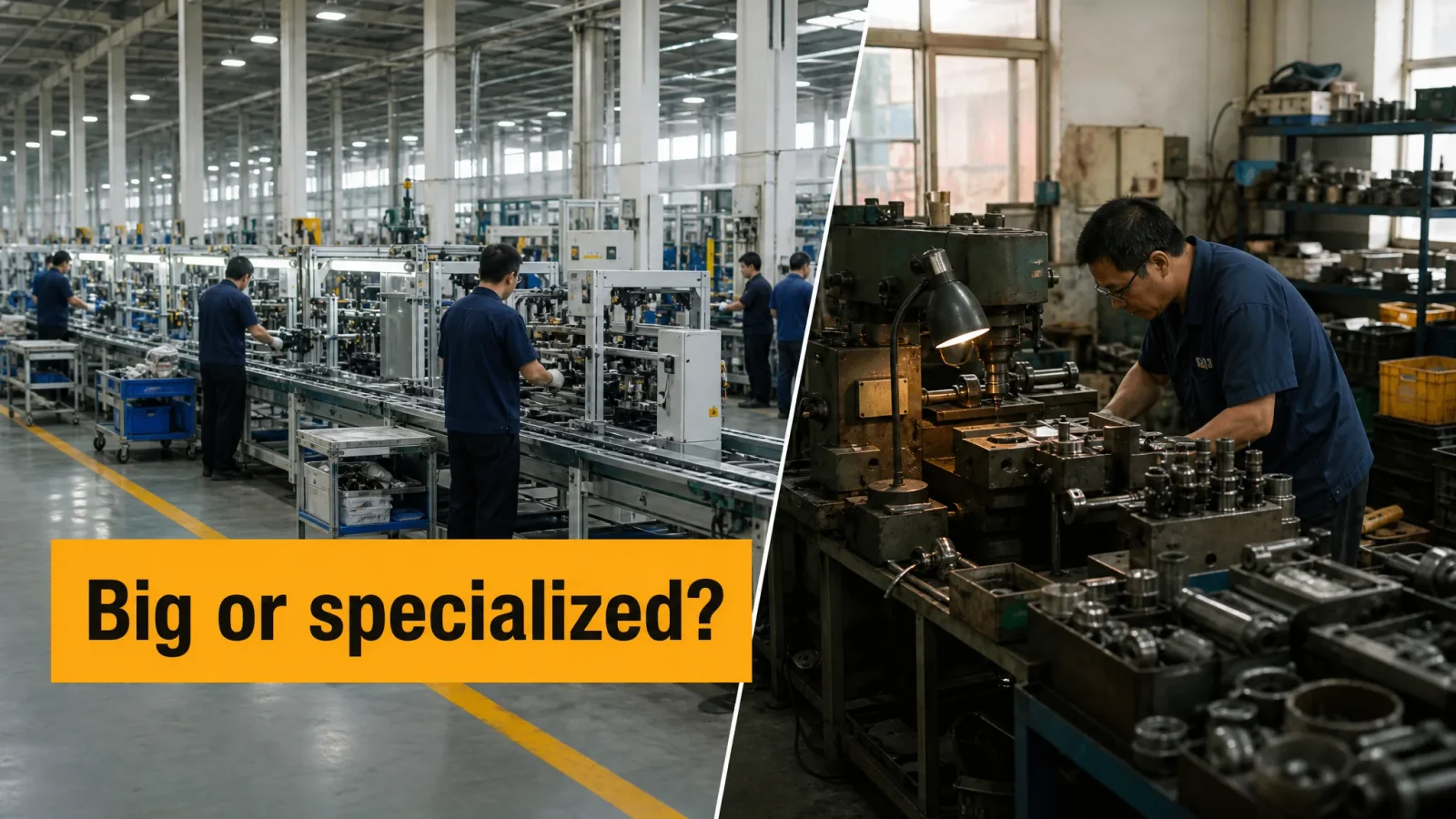
The official August China PMI split was uneven: large companies were at 50.6, medium at 49.4 and small at 47.9. It does not tell you which individual supplier is good. It does provide a useful question framework when choosing between a large factory and a specialist.
Size is not quality
A small plant may have deep process expertise and short decisions. A large plant may offer redundancy, labs and purchasing power. Check the capabilities your product actually needs.
Measure capacity in shifts
Ask about active lines, utilisation, scrap and reserved capacity instead of only monthly output. A written production plan beats a brochure.
Include financial resilience
With a softer small-firm signal, payment milestones, material pre-financing and customer concentration deserve attention. That is risk management, not blanket rejection.
Practical checklist
- Verify supplier size, plant and actual production site.
- Record lines, shifts, scrap and maximum monthly output for each SKU.
- Tie deposits to material, sample and QC milestones.
- Prepare a backup supplier or tooling-access plan for critical products.
Decision frame for your import
The official August PMI for large enterprises was 50.6 while overall production and orders were only just above 50. Company size is context, not a supplier rating. A large plant may offer stable capacity but high MOQs; a small specialist may be flexible but tied to one customer or machine.
Data and document pack per item
For every candidate collect employees, machines, shifts, monthly capacity, utilisation, key customers, sub-suppliers, tooling ownership, quality responsibility and payment terms. Do not ask only for turnover. A plant sheet showing live lines, bottleneck machine and approved capacity is more useful than a corporate profile.
- Express capacity in your SKU, not theoretical tonnes.
- Flag dependency on one customer, machine or input.
- Compare MOQ, changeover, tooling and engineering flexibility.
- Test large and small suppliers with the same pilot order.
A verification workflow from supplier to import
- Segment suppliers by product requirement and risk profile.
- Separate trading company and factory legally and operationally.
- Place a pilot order with a real quantity and inspection plan.
- Check utilisation, material and dates during production.
- Score quality, response and capacity promise after delivery.
A worked decision example
A large OEM can supply 50,000 pieces a month but demands a high MOQ and shares your tool across customers. A small specialist can make 5,000 with a short changeover and direct contact. The specialist fits a market test; before scaling, the importer still builds a second source and tooling/capacity plan.
Common failure modes and countermeasures
- Assuming large means better quality — check process and lot data.
- Assuming small means no risk — check finance, backup and sub-suppliers.
- Inspecting office size instead of a live line — show machines and orders.
- Using theoretical capacity — calculate bottleneck, shifts and changeover.
Message to send to the Chinese supplier
Ask for capacity data that can be checked:
Please state active lines, shifts and monthly capacity for our SKU and identify the bottleneck process. Please disclose MOQ, changeover time, tooling ownership and relevant sub-suppliers. Please notify us before ordering of major customer work, machine downtime or capacity changes.
Release criteria for the file
A release is defensible only when four questions can be answered from the same record: What exactly was checked? Which SKU, batch, route or period does the statement cover? Which primary source or supplier document supports it? Who assessed the deviation and when is it reviewed again? Put those answers in the inspection report instead of marking a line only “passed”. Link the file to the order, sample and receipt. If evidence is missing, give the line an “open” status with an owner and due date. This keeps later corrections traceable and lets procurement distinguish evidence from assumptions.
Follow-up and recheck
Approval is not the end of the check. Set a trigger for the next review: a new batch, material or process change, an authority notice, a price or lead-time deviation, or the scheduled review date. A short monthly reconciliation of orders, supplier data and received goods catches drift earlier than an annual catch-up. When a deviation appears, hold the affected batch, obtain a written supplier response and reopen approval only after a documented corrective record.
<!-- Release template: research review 2026-09 -->Internal release template
A check mark saying “reviewed” is not enough for this topic. In one short line, state that express capacity in your SKU, not theoretical tonnes.. Add the exact scope (SKU, batch, plant, shipment or period), the primary source and document version. The second line records the open assumption or deviation, its owner and due date. The third line records the release decision and which shipment or version remains on hold. Another colleague should be able to reproduce the decision without searching an entire email thread.
Conclusion
PMI helps you ask better questions; the decision comes from the factory and document check. Size should be one risk factor, not the selection rule.
Frequently asked questions
Is a small supplier automatically riskier?
No. Risk depends on process, finances, transparency and alternatives. Small plants often need tighter milestone and capacity controls.
What number should I request before ordering?
An evidenced capacity plan for your SKU covering lines, shifts, material status and QC date.
Is a large supplier automatically safer?
No. Size can provide redundancy, but also complex approvals and high minimums. Check the actual line and dependencies.
How can I test a small specialist?
Use a limited pilot with clear specification, pre-shipment inspection and a documented scale-up or second-source plan.
Sources
Reading aid
Glossary terms in this article
These terms occur in the article. Hover over a highlighted term or open its entry for the full explanation.
Editorial source review: The official large-enterprise PMI value was used as context for plant-level due diligence; no individual supplier size was invented.
FAQ
Is a small supplier automatically riskier?
No. Risk depends on process, finances, transparency and alternatives. Small plants often need tighter milestone and capacity controls.
What number should I request before ordering?
An evidenced capacity plan for your SKU covering lines, shifts, material status and QC date.
Is a large supplier automatically safer?
No. Size can provide redundancy, but also complex approvals and high minimums. Check the actual line and dependencies.
How can I test a small specialist?
Use a limited pilot with clear specification, pre-shipment inspection and a documented scale-up or second-source plan.
Read more
Certified e-commerce merchant (IHK), lives in Guangzhou, inspects Chinese suppliers in person.
About the author →