
Customs and trade rules
China Requires Up to 99.2% Security on Japanese Dichlorosilane
China will require provisional anti-dumping security on certain dichlorosilane imports originating in Japan from September 8, 2026. The rates range from 80.8% to 99.2%, and customs requires a specific commodity code.
 Vinko Kolar· on the ground in Guangzhou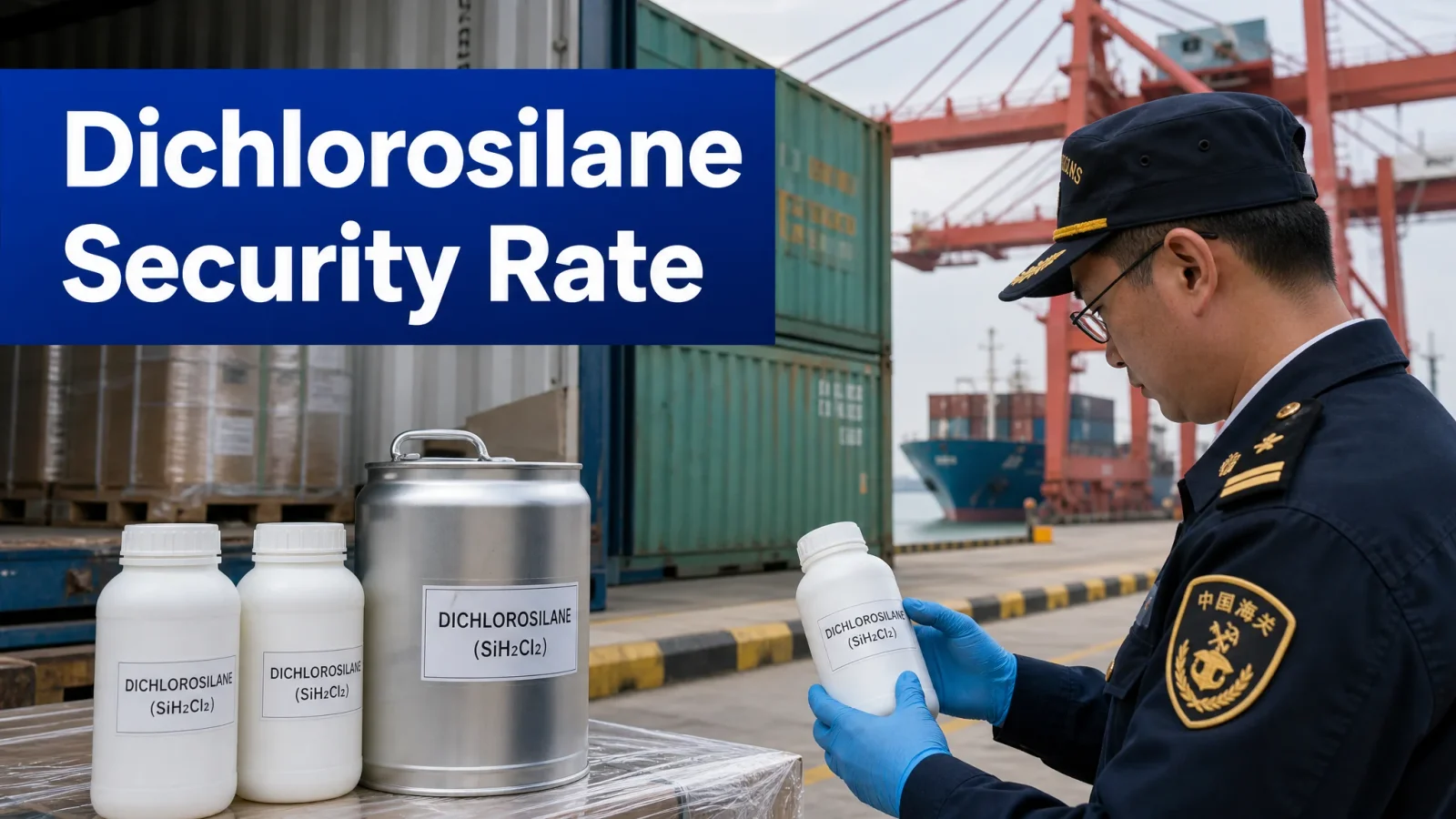
What changes on September 8, 2026?
From September 8, 2026, China will require provisional security on certain imports of dichlorosilane originating in Japan. On September 7, 2026, China’s Ministry of Commerce provisionally found that the Japanese-origin product had been dumped, that the Chinese industry had suffered material injury, and that a causal link existed.
A provisional security is not the same as a final anti-dumping duty. In this proceeding, it is required at import in place of a final anti-dumping duty and acts as a customs safeguard after the provisional finding. The applicable rate depends on the covered product, its origin, and the Japanese company category identified in the official notice.
For importers, the first task is therefore product and declaration review. A shipment must be assessed by its chemical identity, origin, supplier classification, and Chinese customs declaration. The available documents do not support a claim that every Japanese product or every electronics shipment is covered.
Which product is covered?
The covered product is dichlorosilane, also called dichloromethylsilane, with the chemical formula SiH2Cl2. The investigation scope identifies this specific chemical product; the available facts do not automatically place all goods under the four-digit tariff code 28539090 within the measure.
The term “dichlorosilane” should not be treated as a blanket label for every product that might appear in a similar tariff heading. The relevant test is the product described by the Ministry of Commerce and identified by the formula SiH2Cl2. Companies should compare the product specification, safety data sheet, supplier statement, and customs description.
The four-digit code 2853 9090 does not by itself resolve coverage. From September 8, 2026, China’s customs administration requires the covered product to be declared under the specific code 28539090.61. This code must therefore be checked separately in the operational declaration process.
What does “originating in Japan” mean here?
“Originating in Japan” is the origin criterion used in the Chinese Ministry of Commerce measure described in the supplied facts. The measure concerns the covered imported product with Japanese origin, not automatically every product sold by a Japanese company or shipped through Japan.
The supplied sources do not provide a complete origin analysis for every processing, intermediary, or transit scenario. Importers should not infer origin solely from the shipment route or the seller’s registered location. Cases involving a different manufacturing country, intermediaries, or transshipment should be reviewed with the relevant customs specialists and Chinese customs authorities.
How high are the provisional security rates?
The rate depends on the Japanese company category. The rate is 99.2% for Shin-Etsu Chemical, 80.8% for Denal Silane, and 99.2% for other Japanese companies.
| Named company or company group | Provisional security rate |
|---|---|
| Shin-Etsu Chemical | 99.2% |
| Denal Silane | 80.8% |
| Other Japanese companies | 99.2% |
These percentages are provisional security rates, not a proven general price increase for every product imported into China. The supplied facts establish that China requires the security for imports of the covered product. They do not establish that every importer will pass the amount on to a particular customer or that all China import prices will rise.
The Ministry of Commerce notice includes a calculation formula according to the supplied research data. The provided facts do not reproduce every operational parameter needed for a transaction-specific calculation. A reliable example based on an individual invoice value cannot therefore be derived from the available information. Importers should confirm the calculation with their Chinese customs broker and the official requirements.
What does the provisional Ministry of Commerce finding establish?
The September 7, 2026 finding establishes three provisional conclusions: dumping, material injury to the Chinese industry, and a causal link between the two. Those conclusions are the documented basis for the provisional security described in the official notice.
Dumping is the finding made in this specific anti-dumping proceeding concerning the investigated imports from Japan. The term should not be extended to all Japanese chemicals or to unrelated products. The supplied documents do not provide additional figures on pricing, market shares, or the companies allegedly affected.
Material injury is the authority’s finding about harm to the Chinese industry in the proceeding. The available facts do not quantify that injury or identify a general impact on downstream industries. The security rate should therefore not be used as a proxy for a quantified level of damage.
A causal link means that the Ministry of Commerce provisionally connected the found dumping with the found injury. It does not establish that every downstream product, supply chain, or importer will experience the same commercial effect.
Why does code 28539090.61 matter?
China’s customs administration requires the covered product to be declared under specific commodity code 28539090.61 from September 8, 2026. The code is therefore an immediate operational checkpoint for new and pending import declarations.
A commodity code is the customs classification number used to declare goods. For the covered product, the available customs notice identifies the specific code 28539090.61 rather than relying only on the broader four-digit reference 28539090.
Code review should not be performed in isolation. A different code may reflect a different product description, but the code alone does not prove that a shipment is exempt or covered. Companies should document product identity, origin, supplier category, and declaration details together.
Are finished goods made in China covered?
Finished goods made in China are not automatically covered by this measure. The supplied facts concern imports of the described dichlorosilane originating in Japan, not all products manufactured in China or exported from China.
The rule can still matter to semiconductor and electronics supply chains when Japanese-origin dichlorosilane enters a Chinese production process as an input. Relevant review points include the cost of the input, supplier qualification, origin records, and whether the actual chemical matches the product scope.
The measure does not establish a general price increase for China importers. It also does not establish a specific pass-through to a particular buyer, a production stoppage, or a supply shortage. Such conclusions would require transaction-specific or official evidence that is not included in the supplied facts.
Which supply chains should be reviewed first?
Supply chains should be reviewed first where dichlorosilane from Japan is imported directly into China or where the chemical identity and origin of the input are not clearly documented. The measure can create additional review and cash-flow requirements in those chains without proving a broader market trend.
For semiconductor and electronics companies, the key question is the input rather than the finished-product label. A finished product made in China is not covered merely because Japanese chemicals appear somewhere in its supply chain. Conversely, calling a shipment an electronics product does not replace the need to examine the chemical input.
Companies should distinguish the supplier’s location, the shipping route, and the product’s origin. The supplied facts identify Japanese origin as the relevant criterion but do not provide a complete rule for every multi-stage manufacturing or transit scenario.
What should importers do now?
Importers should review the next declaration against the formula, origin, supplier category, and specific Chinese code. The following checklist separates documented points from issues that require case-by-case confirmation.
- Confirm product identity: Check whether the shipment is dichlorosilane or dichloromethylsilane with the formula SiH2Cl2.
- Document origin: Determine whether the product has Japanese origin under the rules applicable to the transaction. Do not rely only on the shipping route or seller location.
- Identify the supplier category: Establish whether the product comes from Shin-Etsu Chemical, Denal Silane, or another Japanese company.
- Check the customs code: Confirm whether the covered product must be declared under 28539090.61 from September 8, 2026.
- Plan for the security: Include the applicable 99.2% or 80.8% rate in the import operating plan. The actual calculation must follow the official requirements.
- Reconcile documents: Ensure that the product description, chemical formula, origin information, and customs declaration are consistent.
- Escalate uncertain cases: Have borderline cases reviewed before declaration by the customs team, customs broker, and, where necessary, the relevant Chinese authority.
- Separate downstream assessment: Test possible cost or supplier effects against actual supply-chain data instead of assuming a general price impact.
This checklist is not a substitute for an individual customs decision. It helps prevent the Japan-specific dichlorosilane measure from being applied prematurely to all China imports or all finished goods.
What remains uncertain?
The supplied facts do not show every practical step for calculating and processing the provisional security in an individual import transaction. The official notice contains a calculation formula according to the research data, but the available summary does not provide all parameters needed for a transaction-specific amount.
The treatment of intermediaries, mixed consignments, different manufacturing countries, and altered chemical specifications also remains open on the supplied record. The sources do not provide a universal answer for those cases.
The available evidence does not establish a general price increase for China imports, a specific effect on finished goods, a supply shortage, or a supplier relocation. These are possible areas for commercial review, not documented consequences of the measure.
What is the reliable assessment for China importers?
The reliable facts are that China will require provisional security from September 8, 2026, for the described Japanese-origin product, with rates ranging from 80.8% to 99.2%. It is also established that the covered product must be declared under specific code 28539090.61.
It would not be reliable to state that every Japanese product, every product under the four-digit code 28539090, or every electronics product made in China is automatically covered. The relevant test remains the specific chemical product, its origin, the named company category, and the Chinese customs declaration.
The first business priority is therefore transaction-level classification and documentation. A general price or market effect is not established by the supplied sources.
Sources
The application will append the complete source list. This article is based on the Chinese Ministry of Commerce provisional determination dated September 7, 2026, and the Chinese customs notice on the commodity code dated September 8, 2026.
Sources
Research checked on 2026-09-09. The following original sources support the factual claims:
- 中华人民共和国商务部贸易救济调查局 – 商务部公告2026年第37号:对原产于日本的进口二氯二氢硅反倾销调查的初步裁定 (2026-09-07): Die Veröffentlichung belegt die vorläufige Feststellung von Dumping und Schaden, den Geltungsbeginn am 8. September 2026, den Produktumfang, die Sicherheitsleistungssätze und die Berechnungsformel.
- 湖南省人民政府门户网站, Wiedergabe der Mitteilung der chinesischen Zollverwaltung – 关于二氯二氢硅商品编号申报要求的公告 (2026-09-08): Die Mitteilung belegt die neue chinesische Zollanmeldung unter dem Warenkode 28539090.61 ab dem 8. September 2026.
Reading aid
Glossary terms in this article
These terms occur in the article. Hover over a highlighted term or open its entry for the full explanation.
- Anti-dumping duty
- An anti-dumping duty is an additional charge imposed when imports are found to be unfairly priced.
FAQ
When does the security requirement take effect?
The provisional security applies to the covered product from September 8, 2026. China’s Ministry of Commerce issued the provisional determination on September 7, 2026.
Which chemical product is covered?
The covered product is dichlorosilane, also called dichloromethylsilane, with the formula SiH2Cl2. The available scope does not automatically include every product under the four-digit code 28539090.
What rate applies to Japanese companies?
The rate is 99.2% for Shin-Etsu Chemical and other Japanese companies. Denal Silane is listed at 80.8%.
Which customs code must be used?
For the covered product, China’s customs administration requires declaration under specific commodity code 28539090.61 from September 8, 2026.
Are finished goods made in China automatically covered?
No. The supplied facts concern Japanese-origin dichlorosilane. They do not establish automatic coverage of finished goods or a general effect on all China imports.
Read more
Certified e-commerce merchant (IHK), lives in Guangzhou, inspects Chinese suppliers in person.
About the author →